Sleep and Migraines: How Rest Affects Recovery & Frequency
Migraine is more than just a bad headache – it is a complex cyclical neurological condition with distinct symptomatic and asymptomatic phases, each requiring a different management approach.
By Migraceutics Editorial Team •
Reviewed by Dr. Anna Gyarmathy, PhD, MSc, MPH, NBC-HWC
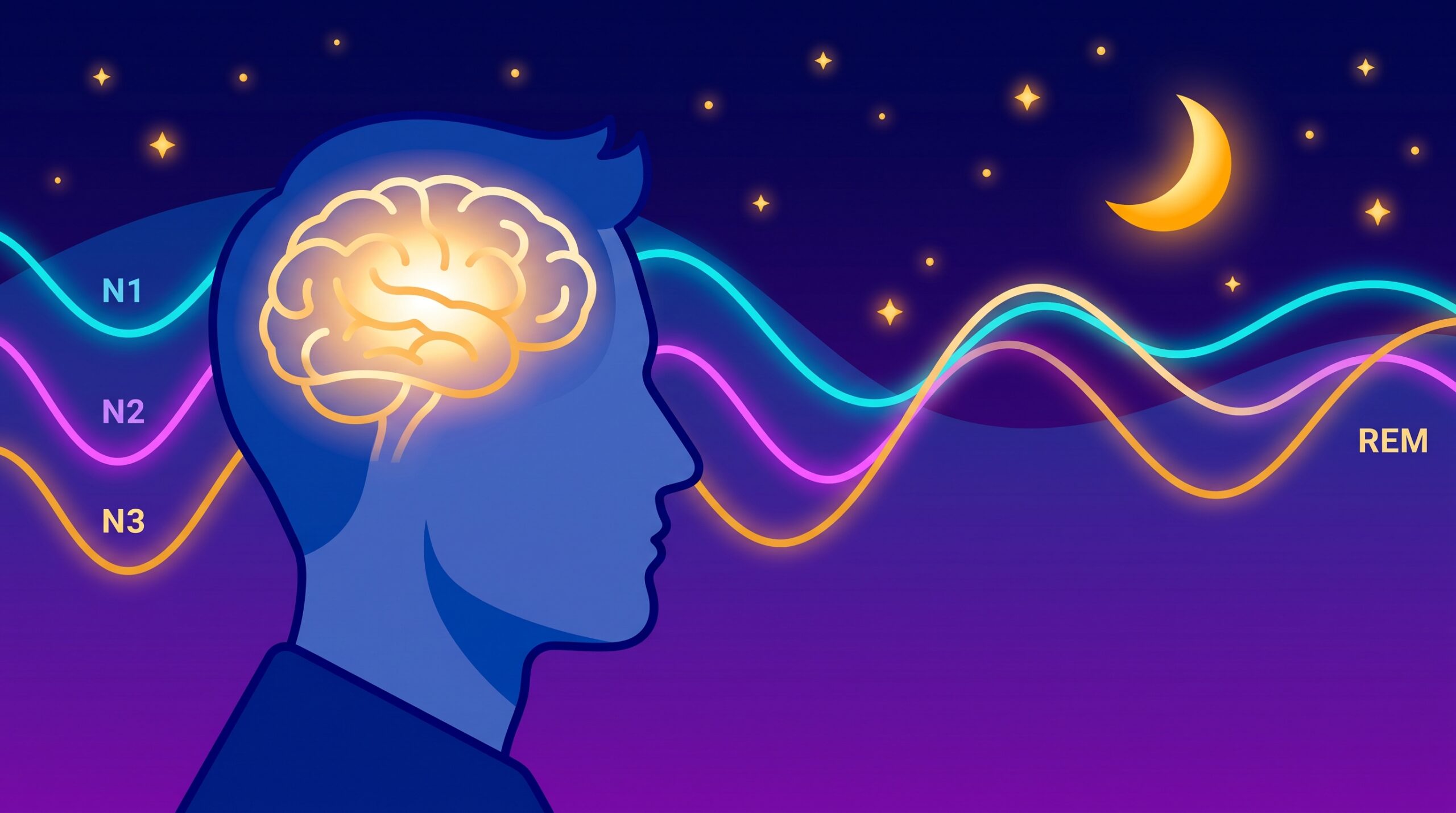
Sleep and migraines are closely linked in both directions. Bad sleep can bring on a migraine attack. And a migraine attack can wreck your sleep. This creates a cycle. But once you understand how it works, you can start to break it.
Both too little sleep and too much sleep can trigger migraines. Sleep is not just rest. It is one of the most powerful tools you have to manage migraine attacks.
Migraine affects about 1 billion people around the world. It is the second leading cause of disability on the planet. That’s a big deal. And sleep is one of the few migraine triggers you can actually control.
Why Sleep and Migraines Are So Closely Connected
Your brain has a part called the hypothalamus. It controls both your sleep-wake cycle and how you feel pain. Because these two systems share the same brain area, sleep problems and migraines often show up together. One is not simply “causing” the other. They are tangled up in the same wiring.
Here is what happens inside your brain when sleep breaks down:
- REM sleep helps balance your mood and lowers stress hormones. Less REM sleep means your brain has a harder time managing stress, which can trigger a migraine.
- Deep sleep repairs your cells and lowers inflammation. Both of these are linked to migraine attacks.
- Poor sleep throws off serotonin and melatonin levels. These two brain chemicals help prevent migraines when they are balanced.
- The glymphatic system cleans waste out of your brain, and it works best while you sleep. Poor sleep may let waste build up, which some research on sleep and migraine pathways suggests could play a role in migraine attacks.
Does Sleep Help Migraines Go Away?
Yes, for many people. Sleep is one of the best natural ways to end a migraine attack. Even a short nap can bring real relief. Kids especially seem to recover fast after sleeping through an attack.
This is why your body wants to lie down in a dark, quiet room during a migraine. That urge is not random. It is your brain asking for the thing that helps it heal.
Can Too Much Sleep Cause a Migraine?
Yes. This surprises a lot of people. You might think “more sleep is always better.” But your migraine-prone brain does not like big changes to its routine. Sleeping in for hours on the weekend can throw off your body clock the same way staying up too late does.
One study on sleep and migraine pain found that disrupted sleep patterns make the brain more sensitive to pain, whether the disruption comes from too little sleep or an irregular schedule. The lesson here is simple: keep your sleep schedule steady. Do not just chase more hours.
Common Sleep Problems That Make Migraines Worse
A few sleep issues show up again and again in people with migraines:
- Insomnia. Trouble falling asleep or staying asleep. This can happen even between migraine attacks, not just during them.
- Sleep apnea. Your breathing stops and starts during sleep, which lowers the oxygen reaching your brain.
- An irregular sleep schedule. Going to bed at a different time each night confuses your circadian rhythm, your body’s internal clock.
- Too much caffeine or screen time before bed. Both delay the release of melatonin, the hormone that helps you fall asleep.
Research published on PubMed has confirmed that people with migraine report much higher rates of insomnia than people without migraine. So if you are dealing with both, you are not alone, and it is not just in your head.
Best Sleep Habits for Migraine Prevention
Small changes to your sleep routine can add up to real results. Here is a simple table you can use as a quick guide.
| Sleep Habit | Why It Helps | Try This |
|---|---|---|
| Go to bed and wake up at the same time daily | Keeps your circadian rhythm steady | Set a bedtime alarm, not just a wake-up alarm |
| Turn off screens 30 minutes before bed | Cuts blue light that delays melatonin | Read a book or listen to calm music instead |
| Keep your room cool and dark | Helps you reach deep sleep faster | Use blackout curtains and a fan |
| Stop caffeine after noon | Avoids delayed sleep onset | Try herbal tea in the afternoon |
| Build a wind-down routine | Lowers stress hormones before bed | Try slow breathing or gentle stretching |
| Keep naps to 30 minutes or less | Avoids messing up your nighttime sleep | Set a timer, and avoid napping after 3 PM |
If you’re building a full wind-down routine, our guide to the five phases of a migraine can help you spot the early warning signs before an attack fully sets in, so you have time to rest before it gets worse.
How to Recover Faster After a Migraine Attack
After a migraine ends, your body still needs time to reset. This recovery period is sometimes called the “postdrome” phase, and skipping proper rest during it can lead to lingering fatigue or even a rebound headache the next day.
Here’s how to recover faster:
- Rest in a dark, quiet room as soon as your symptoms start to ease.
- Avoid screens and bright lights. Your brain is still sensitive after an attack.
- Drink plenty of water. Dehydration makes post-migraine fatigue worse.
- Get back to your normal sleep schedule as soon as you can, instead of oversleeping to “make up for it.”
Nutrient support can also play a role in recovery. Many people look to natural options like magnesium, which has research behind its role in both sleep quality and migraine support, or riboflavin (vitamin B2), which supports the brain’s energy production between attacks.
FAQ: Sleep and Migraine
Does sleep help migraines go away?
Yes. For many people, sleep is one of the most effective natural ways to end an active migraine attack. Even a short nap can help.
Can too much sleep cause a migraine?
Yes. Oversleeping disrupts the same body rhythms as sleep deprivation, and it is a well-known migraine trigger.
How many hours of sleep help prevent migraines?
Most adults need 7 to 9 hours a night. Keeping a steady sleep schedule matters just as much as the number of hours.
What sleep disorders are linked to migraine?
Insomnia, sleep apnea, restless leg syndrome, and irregular sleep schedules are all linked to more frequent migraine attacks.
Why do I get a migraine after sleeping in?
Sleeping in changes your normal routine. Migraine-prone brains are very sensitive to any shift in sleep timing, even a “good” one.
Final Thoughts
Sleep is not just something that happens in the background. It is an active part of how your brain manages pain and stress. That’s why sleep and migraines are so closely tied together.
Protecting your sleep schedule, both in timing and quality, is one of the few migraine strategies backed by real science and real patient experience. Small changes, like a steady bedtime or a calming wind-down routine, can lead to fewer attacks, faster recovery, and more control over your daily life.
About the Reviewer – Dr. Anna Gyarmathy, PhD, MSc, MPH, NBC-HWC
Dr. Anna is a researcher, author, and founder of Migraceutics. She holds a PhD summa cum laude and advanced degrees in biomedical fields. She specializes in migraine education, nutritional interventions, and evidence-based lifestyle strategies. Her work focuses on translating scientific research into practical guidance for people living with migraine.
Migraceutics: The One and Only Migraine Phase-Specific Dietary Supplement
Migraceutics is the only phase-specific migraine supplement – supporting each stage of migraine with targeted formulas.
- Between migraines (interictal phase) and during migraines (migraine phase): MigReForm fortifies the nervous system daily
- During migraines (migraine phase): MigRePair supports symptom relief
- Menstrual migraine: MigRePair MM from Day 21 to Day 5 supports hormonal balance and symptom relief
Migraceutics: comprehensive, tailored relief surpassing one-size-fits-all supplements.