The Five Phases of Migraine Explained
Migraine is more than just a bad headache – it is a complex cyclical neurological condition with distinct symptomatic and asymptomatic phases, each requiring a different management approach.
By Migraceutics Editorial Team •
Reviewed by Dr. Anna Gyarmathy, PhD, MSc, MPH, NBC-HWC
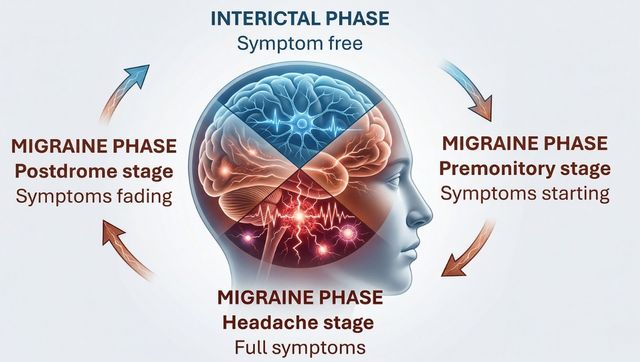
A migraine is not just a bad headache. It is a condition that affects your whole body and follows a pattern. Doctors divide this pattern into five stages or phases of migraine. Knowing these migraine phases can help you understand what your body is going through and how to take care of yourself.
About 20% of women and 6% of men get migraines every year. If you learn the signs of each stage, you can manage your symptoms better and feel more in control.
Phase 1: Premonitory Stage (Early Warning Phase of Migraine)
The first of the phases of migraine is called the premonitory or prodrome stage. This stage is like an early warning sign. It can start a few hours or even a few days before the headache begins. You may feel very tired or yawn more than usual. Some people feel moody or crave certain foods. These changes happen because a part of your brain called the hypothalamus becomes active.
This part of the brain controls sleep, hunger, and emotions. During this stage, your body becomes more sensitive to light and sound, even before the pain starts.
Phase 2: Aura Stage
Not everyone has aure, but about one in three people do. The aura usually happens just before the headache and lasts from a few minutes up to one hour. However, it can also happen after the headache phase, or when one does not even have a migraine. You may see flashing lights, zigzag lines, or blurry spots. Some people feel tingling in their face or hands. This happens because of a wave of electrical activity in the brain.
Although it can feel scary, it is a known part of the phases of migraine and helps signal that the headache phase is coming next.
Phase 3: Headache Phase of Migraine
This is the most painful of the phases of migraine. The headache often feels like a severe, throbbing pain, usually on one side of the head. It can last from a few hours up to three days. You may also feel sick, vomit, or become very sensitive to light and sound. Your brain becomes extra sensitive, which makes normal things feel painful.
This is why many people prefer to rest in a quiet, dark room during this stage.
Phase 4: Postdrome Phase (Recovery Phase of Migraine)
After the headache ends, the body needs time to recover. This stage is called the postdrome phase and is often known as a “migraine hangover.” You may feel tired, weak, or confused. Some people find it hard to focus or think clearly. This phase usually lasts about one day.
Even though the pain is gone, your brain is still settling down. It is important to rest and take care of yourself during this time.
Phase 5: Interictal Phase of Migraine
The last of the phases of migraine is the interictal phase. This is the time between migraine attacks. You may feel normal during this stage, but your brain is still sensitive. Stress, poor sleep, or certain foods can trigger another migraine.
To stay healthy, try to keep a regular routine. Eating well, sleeping properly, and managing stress can help reduce future attacks.
Conclusion: Understanding the Phases of Migraine
Learning about the phases of migraine can help you take control of your health. You do not have to wait for the pain to begin before taking action. By noticing early signs and taking simple steps, you can reduce the impact of migraines. Small changes in your daily habits can make a big difference. With the right knowledge and care, you can manage migraines and live a more comfortable life.
About the Reviewer – Dr. Anna Gyarmathy, PhD, MSc, MPH, NBC-HWC
Dr. Anna is a researcher, author, and founder of Migraceutics. She holds a PhD summa cum laude and advanced degrees in biomedical fields. She specializes in migraine education, nutritional interventions, and evidence-based lifestyle strategies. Her work focuses on translating scientific research into practical guidance for people living with migraine.
Migraceutics: The One and Only Migraine Phase-Specific Dietary Supplement
Migraceutics is the only phase-specific migraine supplement – supporting each stage of migraine with targeted formulas.
- Between migraines (interictal phase) and during migraines (migraine phase): MigReForm fortifies the nervous system daily
- During migraines (migraine phase): MigRePair supports symptom relief
- Menstrual migraine: MigRePair MM from Day 21 to Day 5 supports hormonal balance and symptom relief
Migraceutics: comprehensive, tailored relief surpassing one-size-fits-all supplements.