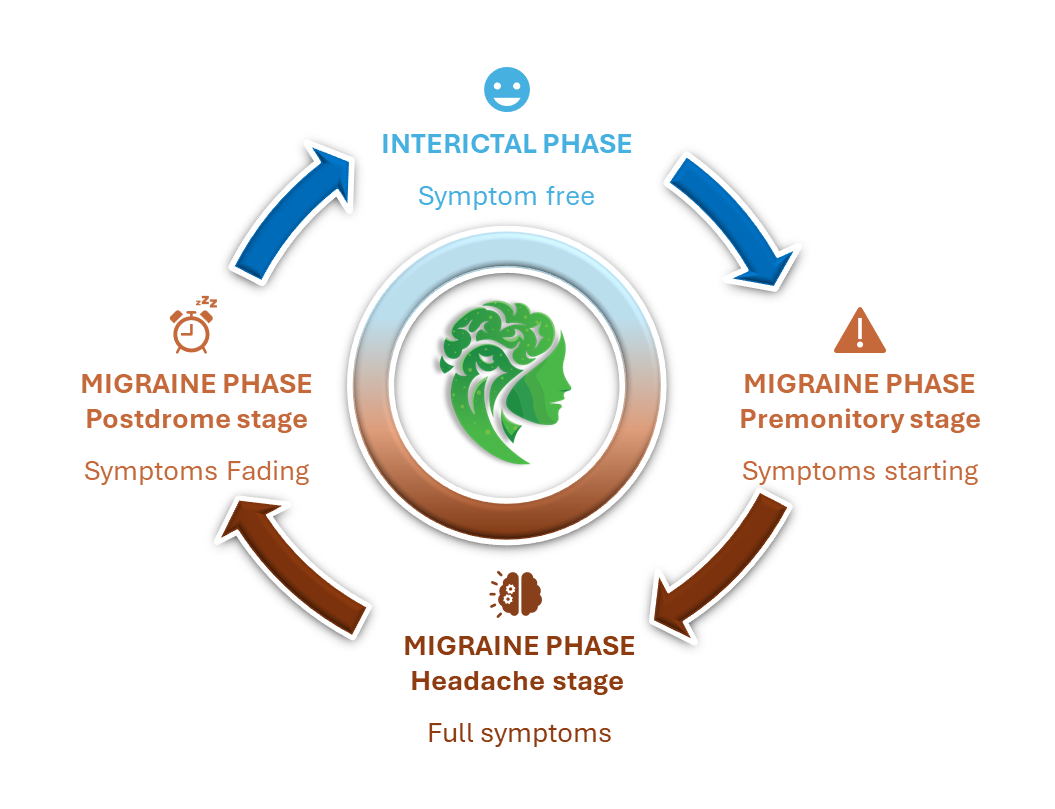
A migraine attack moves through four phases: the warning signs (prodrome), aura, the headache, and recovery (postdrome). Between attacks, the brain is in a fifth phase called the interictal phase. Not everyone goes through every phase, and each one feels different. Knowing them helps you spot an attack early and take care of yourself at every step.
Migraine is not just a bad headache. It is a brain condition that runs in a cycle. Because symptoms change from phase to phase, what helps at one stage may not help at another.
What Are the Phases of Migraine?
Doctors describe the phases of migraine as a repeating cycle. Here is the short version:
| Phase | What it is | How long it lasts |
|---|---|---|
| Interictal | The time between attacks | Varies |
| Prodrome | Early warning signs | A few hours to two days |
| Aura | Short changes in vision or feeling | 5 to 60 minutes |
| Headache | The main attack | A few hours to three days |
| Postdrome | The “migraine hangover” | About a day, sometimes up to two |
Some people skip phases. You can have aura with no headache, and not everyone notices warning signs. Your pattern can also change from one attack to the next. For a simpler walk-through, see our guide to the five phases of migraine.
Why Migraine Comes in Phases: A Sensitive Brain
Experts describe migraine as a disorder of sensory processing that cycles up and down. Think of it as a threshold, like a fence. In a person with migraine, the fence is lower, and it moves up and down over time. Light, sound, smells, pain, and stress all push against it. When the threshold drops too low, an attack begins.
Many things can lower it: poor sleep, stress, skipped meals, hormone changes, and low levels of key vitamins and minerals. Our guide to common migraine triggers explains these in more detail. Good migraine care has two goals. Keep the threshold high, and act quickly when it starts to dip.
The Time Between Attacks (Interictal Phase)
This is the calm between attacks. You may feel normal, but the migraine brain often stays more sensitive to light, sound, and stress even now. Some people also notice mild dizziness or light sensitivity between attacks.
This is the best time to work on prevention. Steady habits matter most: regular sleep, regular meals, plenty of water, exercise, and stress control. Daily nutrient support can be part of the plan too. For example, MigReForm™ is made for daily use, both between attacks and during them, to help replenish the vitamins and minerals that support a healthy sensory threshold.
The Warning Signs (Prodrome)
The prodrome can start hours, or even a day or two, before the pain. Many people notice it, but estimates vary a lot. A large clinic study found that about one in three patients had warning signs, while a study of more than 4,800 patients found about one in five. Other studies have reported higher numbers, which is why the range is so wide.
This stage is linked to the hypothalamus, the part of the brain that controls sleep, hunger, and mood. Common signs include:
- Tiredness and yawning
- Trouble concentrating
- Neck stiffness
- Sensitivity to light and sound
- Mood changes, anxiety, or feeling low
- Food cravings or extra thirst
Some cravings are part of the warning phase, not the cause of the attack. That is why a symptom diary helps.
What to do: Rest, drink water, and take any medicine your doctor has advised as early as you can. Keep up your daily routine. Some people also add short-term support at this stage. MigRePair™ is made for short-term use once symptoms begin, alongside daily MigReForm.
The Aura Phase
Aura affects about 1 in 4 to 1 in 3 people with migraine. Aura is a short set of changes in your senses. It usually shows up before or during the headache, and sometimes with no headache at all. Most auras last between 5 and 60 minutes.
Aura is linked to a slow wave of electrical activity that moves across the outer layer of the brain. Common signs include:
- Zigzag lines or flickering lights
- Blind spots or blurry vision
- Tingling in the face or hand
- Trouble finding words or speaking
Aura can feel scary, but it is a known part of migraine. Learn more in our guide to what migraine aura is. If aura is brand new, lasts longer than an hour, or comes with weakness on one side, get medical help right away.
The Headache Phase of Migraine
This is the most familiar phase. The pain is often throbbing and on one side of the head. It can last from a few hours to three days. Nausea, vomiting, and sensitivity to light and sound are common.
During an attack, nerves in the head release chemicals such as CGRP, which cause inflammation and widen blood vessels. As the attack goes on, the brain becomes more sensitive, so even normal touch or light can hurt.
What to do: Rest in a dark, quiet room, sip water, and use the medicines your doctor prescribed. You can keep using daily MigReForm and short-term MigRePair through this stage. Seek urgent care for a sudden, severe headache unlike any you’ve had, or if you also have a fever with a stiff neck, weakness, or confusion.
The Recovery Phase (Postdrome)
After the pain ends, many people feel wiped out. This is the postdrome, often called a “migraine hangover.” In a diary study of 120 patients, 81% had at least one symptom afterward, and in most attacks people were back to normal within 24 hours.
Common signs include:
- Tiredness and weakness
- Brain fog and trouble concentrating
- Stiff neck
- Ongoing light or sound sensitivity
- Mild head discomfort
Even though the pain is gone, your brain is still settling. Rest, drink water, eat gentle meals, and ease back into your day. Avoid stacking on new triggers, like a very late night, while you recover. Nutrient support such as MigRePair can continue until symptoms fade.
How to Support Yourself Through the Whole Cycle
Migraine care is not only about stopping pain. It works best when you plan for every phase:
- Protect: Build resilience between attacks with steady sleep, meals, water, and daily MigReForm.
- Act early: Watch for warning signs. Rest, hydrate, and use your doctor-approved plan quickly. Short-term MigRePair can be added alongside your daily routine.
- Recover: Give your brain time. Rest, water, and gentle food help.
- Maintain: Keep good habits going, including sleep, stress control, exercise, and a symptom diary, to help keep your threshold higher.
Migraceutics products are dietary supplements and are not meant to diagnose, treat, cure, or prevent any disease. Talk with your healthcare provider before starting a new supplement.
FAQ: Migraine Phases
How many phases does a migraine have?
A migraine attack has four phases: prodrome, aura, headache, and postdrome. The time between attacks is called the interictal phase, which many experts count as a fifth phase. Not everyone goes through every phase.
How long does each migraine phase last?
Prodrome lasts a few hours to two days, aura usually 5 to 60 minutes, and the headache a few hours to three days. Postdrome lasts about a day for most people. Times differ from person to person and from attack to attack.
What is a migraine hangover?
A migraine hangover is another name for the postdrome phase. It brings tiredness, brain fog, and a stiff neck after the pain ends. In one diary study, 81% of patients had at least one symptom.
Can you have a migraine without a headache?
Yes. Some people have aura or other phases with no headache at all. This is sometimes called a silent migraine.
What is the interictal phase?
The interictal phase is the time between migraine attacks. You may feel normal, but the brain can stay more sensitive. It is the best time to focus on prevention.
Final Thoughts: Migraine Phases
Migraine follows a pattern, and each phase gives you a chance to act. Spotting the warning signs, resting through the attack, and giving yourself time to recover can make each episode easier to handle. Small, steady habits between attacks can help keep your migraine threshold higher. Start by writing down your own phases. You may see a pattern you can plan around.