One-Sided Headaches: Why Your Head Hurts on One Side and When to Worry
Quick answer: A headache on one side of the head is most often a migraine. Migraine pain usually throbs, lasts hours to days, and comes with nausea or light sensitivity. Cluster headache causes severe pain behind one eye with a watery eye or runny nose on the same side. Neck, nerve, and sinus problems can also cause one-sided pain. A headache that is sudden, new, or always on the same side should be checked by a doctor.
A throbbing pain on just the left side of your head. A stabbing ache behind your right eye. A headache on one side of the head is very common, and it can feel alarming when it strikes.
The good news is that most are not dangerous. The side of your head that hurts matters less than the pattern of the pain. This guide explains the common causes, how to tell them apart, and the warning signs that mean you should see a doctor.
What Causes a Headache on One Side of the Head?
1. Migraine
Migraine is the most common cause of one-sided head pain. According to the International Classification of Headache Disorders, a migraine attack usually has at least two of these features:
- Pain on one side of the head
- Throbbing or pulsing pain
- Moderate to severe intensity
- Pain that gets worse with routine activity, like climbing stairs
Migraine also comes with nausea or vomiting, or sensitivity to both light and sound. An attack lasts 4 to 72 hours without treatment. Some people see flashing lights or zigzag lines, called aura, before the pain starts. The painful side can switch from one attack to the next.
2. Cluster headache
Cluster headache is less common but extremely painful. It strikes on one side only, usually around or behind the eye or at the temple. Each attack lasts 15 minutes to 3 hours and can happen up to 8 times a day.
On the painful side, the eye may water or turn red, the nose may run or feel blocked, and the eyelid may droop. Unlike people with migraine, people with cluster headache often feel restless and pace. Attacks tend to come in “cluster periods” of weeks or months, often at the same time of day.
3. Tension-type headache
Tension-type headache usually feels like a tight band around both sides of the head. It is mild to moderate and rarely causes nausea. Sometimes it is felt more on one side, especially when linked to stress, poor posture, or long hours at a screen.
4. Cervicogenic (neck-related) headache
This headache starts in the neck. The pain begins at the back of the head on one side and spreads forward. It often gets worse with certain neck movements or after sitting in one position for a long time.
5. Sinus headache
A true sinus headache comes with a sinus infection. Look for a blocked nose, thick yellow or green mucus, fever, and pressure in the cheeks or forehead. Many “sinus headaches” are actually migraines. In a study of nearly 3,000 people with a history of sinus headache, 88% had migraine-type headaches.
6. Other, less common causes
- Hemicrania continua: a constant one-sided headache that never fully goes away.
- Occipital neuralgia: sharp, shooting pain from the back of the head over the scalp.
- Trigeminal neuralgia: brief, electric-shock pains in one side of the face.
- Giant cell arteritis: temple pain in people over 50, often with scalp tenderness or jaw pain when chewing. This needs urgent care because it can affect vision.
- Eye, tooth, or jaw problems: such as acute glaucoma, a dental infection, or a jaw joint (TMJ) problem.
How to Tell Common One-Sided Headaches Apart
| Type | Where it hurts | How it feels | How long | Other clues |
|---|---|---|---|---|
| Migraine | One side (can switch) or both | Throbbing, moderate to severe | 4 to 72 hours | Nausea, light and sound sensitivity, aura |
| Cluster | Always the same side, behind the eye or temple | Sharp, boring, very severe | 15 minutes to 3 hours, up to 8 a day | Watery eye, runny nose, droopy eyelid, restlessness |
| Tension-type | Usually both sides | Tight, pressing band | 30 minutes to several days | Mild, no nausea |
| Cervicogenic | One side, back of head to front | Dull, aching | Varies | Worse with neck movement or posture |
| Sinus | Cheeks, forehead, around the nose | Pressure | During a sinus infection | Thick mucus, blocked nose, fever |
What Does the Location of Your Headache Mean?
Headache on the left side vs. the right side
There is no headache that belongs to the left or right side only. Migraine, cluster headache, and neck-related headache can all affect either side. Neither side is more serious. The pattern, timing, and other symptoms tell you far more than the side.
Pain behind one eye
Pain behind one eye is common in both migraine and cluster headache. You may have heard the term “ocular migraine.” It usually refers to vision changes, like flashing lights or a temporary blind spot, rather than pain behind the eye. A red, painful eye with blurred vision is different. It can be acute glaucoma and needs emergency care.
Pain at the back of the head on one side
This often points to the neck. Cervicogenic headache and occipital neuralgia both start here. Tension-type headache and migraine can also cause pain at the base of the skull.
Headache that is always on the same side
Migraine usually switches sides over time. A headache that is always on exactly the same side, called a side-locked headache, is worth a doctor visit to rule out other causes.
What Triggers One-Sided Migraine Headaches?
Knowing your triggers is one of the most useful ways to have fewer attacks. Common ones include:
- Hormone changes: many women get migraines around their period, when estrogen drops. Research on migraine and hormones shows how menstrual cycles, birth control, and pregnancy can affect attacks.
- Irregular sleep: too little sleep, too much, or a changing schedule.
- Skipped meals and dehydration.
- Stress, and the “let-down” period after stress ends.
- Sensory triggers: bright or flickering light, loud noise, and strong smells.
- Alcohol: a common migraine trigger, and a very reliable trigger for cluster attacks during a cluster period.
Learn how to spot your own patterns in our guide to common migraine triggers, or read more about how hormones affect headaches.
How to Treat a Headache on One Side of the Head
The right treatment for a headache on one side of the head depends on its type.
- Migraine: take your rescue medicine early, at the first sign of pain. If attacks are frequent, ask your doctor about preventive treatment. See how migraine medications and supplements compare.
- Cluster headache: standard pain relievers work too slowly. A doctor can prescribe treatments such as high-flow oxygen or fast-acting injectable medicine.
- Tension-type and neck headaches: regular breaks from screens, better posture, stretching, and physiotherapy often help.
- All headaches: keep a headache diary. Note the date, the side, how long it lasted, and what you ate, drank, or did beforehand.
Supplement support for migraine
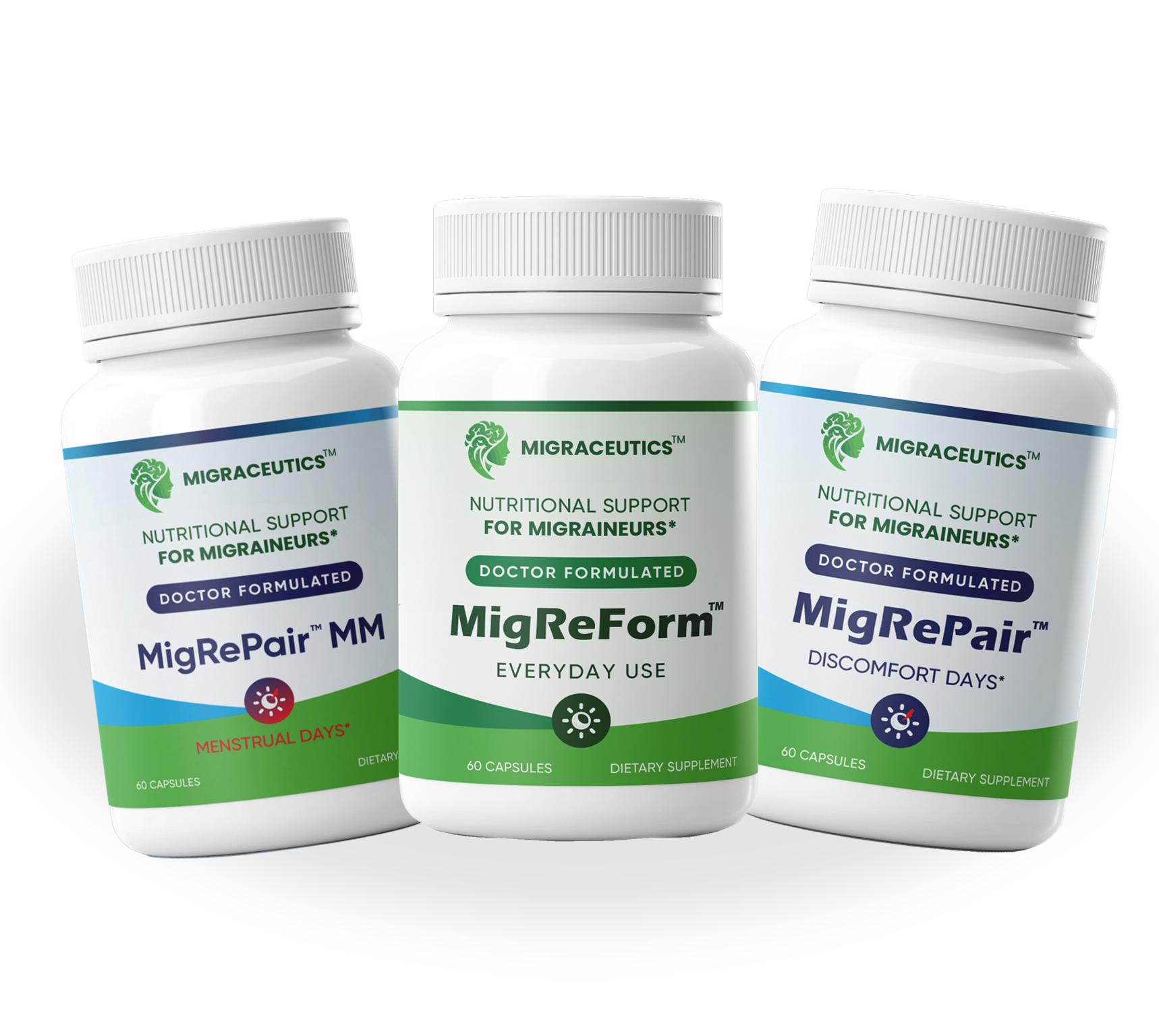
For people with migraine, supplements can be part of a long-term plan alongside medical care. Migraceutics offers a phase-specific system, with support matched to each stage of the migraine cycle:
- MigReForm: a daily multivitamin formula for ongoing support between and during attacks.
- MigRePair: herbal support at the first signs of an attack.
- MigRePair MM: formulated for menstrual migraine, taken from Day 21 to Day 5 of the cycle.
- MigReLax: herbal sleep and relaxation support, since poor sleep is both a trigger and a symptom of migraine.
These supplements are designed for migraine. They are not a treatment for cluster headache or for headaches caused by another medical condition.
Find the right support for each migraine phase. Start with daily MigReForm, keep MigRePair on hand for early symptoms, and add MigReLax on nights when sleep is hard.
When Is a Headache on One Side of the Head an Emergency?
Most of the time, a headache on one side of the head is not dangerous. Doctors use a checklist of warning signs to spot the rare ones that are. Get urgent medical help if you have:
- A sudden, severe headache that peaks within a minute, like a thunderclap
- Weakness, numbness, face drooping, confusion, or trouble speaking
- Headache with fever, a stiff neck, or a rash
- A headache after a head injury
- A red, painful eye with blurred vision or halos around lights
- New temple pain after age 50, especially with jaw pain or vision changes
See a doctor soon if your headaches are new, getting worse, changing pattern, waking you from sleep, or always on the same side. Also book a visit if you need pain medicine more than two or three days a week.
Frequently Asked Questions
Why does my head only hurt on one side?
The most common cause of a headache on one side of the head is migraine, which often affects one side at a time. Cluster headache, neck problems, nerve irritation, and sinus infections can also cause one-sided pain. The pattern of your headache, how long it lasts, and the symptoms that come with it are the best clues to the cause.
Is a headache on the left side more serious than one on the right?
No. Neither side is more dangerous than the other, and the side alone does not tell you the cause. What matters more is whether the headache is new, sudden, getting worse, or always on exactly the same side. Those patterns are worth checking with a doctor.
What does a migraine behind one eye mean?
Pain behind one eye is a common place for migraine pain to sit. It is also the typical spot for cluster headache, which comes with a watery eye or runny nose on the same side. A red, painful eye with blurred vision is different and needs urgent care, because it can be an eye emergency.
How can I tell a migraine from a cluster headache?
Migraine usually lasts 4 to 72 hours, throbs, and comes with nausea or sensitivity to light. People with migraine often want to lie still in a dark room. Cluster headache is shorter, from 15 minutes to 3 hours, but very severe and always on the same side. It causes eye tearing or a runny nose, and people often feel restless and pace.
Can a one-sided headache be a sign of a stroke or brain tumor?
Rarely. Most one-sided headaches are migraine or another primary headache. Get urgent help if the headache is sudden and severe, or comes with weakness, numbness, confusion, trouble speaking, or vision loss. See a doctor soon if a headache is new, keeps getting worse, or changes pattern.
How do I get rid of a one-sided headache fast?
For migraine, take your usual rescue medicine at the first sign of pain, then rest in a dark, quiet room and drink water. A cold pack on the painful side can help. Cluster headache usually does not respond to standard pain relievers and needs treatment prescribed by a doctor.
The Bottom Line
A headache on one side of the head is usually a migraine, but cluster, tension, neck, and sinus headaches can feel similar. Pay attention to how long the pain lasts, how it feels, and what comes with it. Those clues matter more than which side hurts.
Track your attacks, learn your triggers, and talk to your doctor about a plan that fits your headache type. For migraine, the Migraceutics phase-specific system can be one part of that plan.