Migraine Medications vs Supplements: Which Works Better?
Migraine is more than just a bad headache – it is a complex cyclical neurological condition with distinct symptomatic and asymptomatic phases, each requiring a different management approach.
By Migraceutics Editorial Team •
Reviewed by Dr. Anna Gyarmathy, PhD, MSc, MPH, NBC-HWC

Migraine Medications vs. Natural Supplements: Which Works Better, and Can You Use Both?
Quick answer: Migraine medications work fast to stop attacks or lower how often they happen, but they can cause side effects and rebound headaches if overused. Supplements such as magnesium, riboflavin (vitamin B2), CoQ10 and feverfew work slowly, over 2 to 3 months, to help reduce attack frequency. For many people, the best plan uses both, guided by a doctor.
Migraine is more than a bad headache. It is a brain condition that can take days away from work, family and sleep. Most people try medication first. Many also look for natural ways to have fewer attacks. So which works better?
The honest answer is that they do different jobs. This guide explains how each one works, what the research shows, and how to combine them in a plan that fits your type of migraine.
What Is the Difference Between Migraine Medications and Supplements?
Migraine medications are drugs tested and approved to treat or prevent migraine. Some stop an attack once it starts. Others are taken daily to prevent attacks.
Migraine supplements are vitamins, minerals and herbal extracts. They do not stop an attack the way a triptan does. Instead, they aim to make the brain less sensitive to triggers over time, so attacks come less often.
How Do Migraine Medications Work?
Acute (rescue) medications
These are taken at the first sign of an attack. They work best when taken early. According to the American Headache Society, options include:
- Over-the-counter pain relievers: ibuprofen, naproxen, aspirin, acetaminophen, or combination products such as Excedrin Migraine.
-
- Triptans: sumatriptan, rizatriptan and others. They act on serotonin receptors and calm the overactive pain nerves behind a migraine.
-
- Gepants: ubrogepant and rimegepant block CGRP, a protein that drives migraine pain. They are an option for people who cannot take triptans.
-
- Ditans: lasmiditan targets a different serotonin receptor without narrowing blood vessels.
-
- Anti-nausea medicines: help with vomiting and can help pain relievers absorb better.
Preventive medications
Prevention is usually offered when migraines happen often or are disabling. Options include beta-blockers, certain anti-seizure medicines, some antidepressants, CGRP-blocking injections, the daily gepant, atogepant, and Botox for chronic migraine.
The downsides of medication
Medications can cause side effects such as tiredness, dizziness, tingling or weight changes. Some are expensive or need a specialist.
The biggest risk is medication overuse headache. Taking rescue medicine too often can make headaches more frequent, not less. A review in The Lancet Neurology estimates it affects 1 to 2% of people each year. As a rule of thumb, limit triptans to fewer than 10 days a month and simple pain relievers to fewer than 15.
Which Natural Supplements Have Evidence for Migraine?
In the 2012 American Academy of Neurology and American Headache Society guideline, magnesium, riboflavin and feverfew were rated “probably effective” for migraine prevention. CoQ10 was rated “possibly effective.” Here is what the key studies found.
Magnesium for migraines
Magnesium helps control nerve signals and blood vessel tone. Many people with migraine have low magnesium levels. In a randomized controlled trial of 81 patients, 600 mg of magnesium daily cut attack frequency by 41.6%, compared with 15.8% on placebo. The most common side effect was loose stools.
Riboflavin (vitamin B2) for migraines
Riboflavin helps brain cells make energy. In a three-month trial, 400 mg daily halved attacks in 59% of people, compared with 15% on placebo. The full effect took about three months, so patience matters.
Coenzyme Q10 (CoQ10)
CoQ10 supports the energy factories inside cells. In a double-blind trial, 100 mg taken three times a day reduced attack frequency and days with nausea more than placebo by the third month.
Feverfew
Feverfew is a daisy-family herb used for headaches for centuries. In a trial of 170 patients, a standardized feverfew extract reduced attacks by 1.9 per month, versus 1.3 on placebo, with side effects similar to placebo. Feverfew is not recommended during pregnancy.
Butterbur: effective, but only in PA-free form
Butterbur extract reduced migraine frequency in a placebo-controlled trial. However, the raw plant contains pyrrolizidine alkaloids (PAs), which can damage the liver. The NIH LiverTox database notes that butterbur must be specially processed to remove them, and the AAN later retired its butterbur recommendation over safety concerns. Only choose products that state they are PA-free.
Migraine Medications vs. Supplements: Side-by-Side
| Migraine medications | Natural supplements | |
|---|---|---|
| Main job | Stop attacks (acute) or prevent them (preventive) | Reduce how often attacks happen over time |
| How fast | Acute: 30 minutes to 2 hours | 2 to 3 months of daily use |
| Strength of evidence | Strong, large clinical trials | Moderate, smaller trials |
| Common side effects | Tiredness, dizziness, rebound headaches if overused | Usually mild: stomach upset, loose stools |
| Prescription needed | Often | No |
| Best for | Fast relief and moderate to severe or frequent migraine | Long-term support, often alongside medication |
Can You Take Migraine Supplements With Medication?
Yes, for most people. The Migraine Trust notes that supplements can be taken alongside migraine medicines, and some people find the combination works better than either alone. A few points to check with your pharmacist:
- Feverfew and willow bark may add to the effect of blood thinners and aspirin.
-
- Valerian and other calming herbs may add to the effect of sedatives or sleep medicines.
-
- Magnesium can reduce absorption of some antibiotics, so take them at different times.
How to Combine Medications and Supplements: A Phase-by-Phase Plan
A migraine is not one event. It moves through phases: the calm days between attacks, the early warning signs, the attack itself, and recovery. For many women, the days around a period are a phase of their own. Matching support to each phase is the idea behind the Migraceutics phase-specific system.
| Phase | Medical care (with your doctor) | Supplement support | Migraceutics option |
|---|---|---|---|
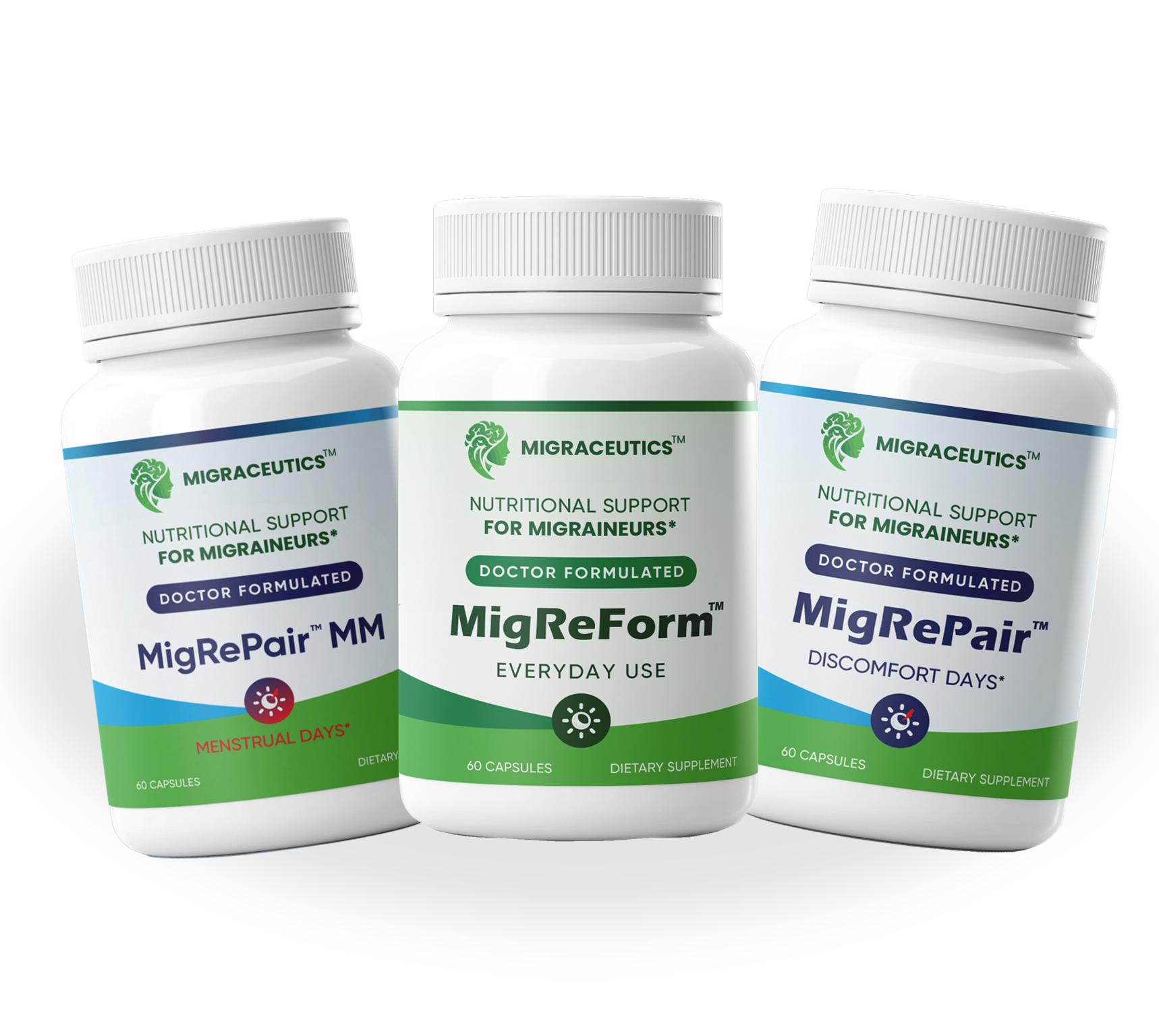
| Every day, between attacks | Preventive medicine if attacks are frequent | Daily nutrients such as magnesium and riboflavin | MigReForm: daily multivitamin formula for migraineurs |
| First signs and attack | Rescue medicine, taken early | Feverfew, PA-free butterbur, grape seed extract | MigRePair: herbal support during active migraine |
| Menstrual window (Day 21 to Day 5) | Your doctor may suggest short-term prevention | Feverfew, white willow bark, ginger, pine bark | MigRePair MM: formulated for menstrual migraine |
| Sleep and recovery | Rest, fluids, routine | Valerian, lemon balm, passionflower, hops | MigReLax: sleep and relaxation support |
Poor sleep and stress are among the most common migraine triggers you can control, which is why recovery support matters. Migraceutics is also being studied in a randomized clinical trial, the START study, which began in 2026.
Build your phase-specific plan. Start with daily MigReForm for ongoing support, and keep MigRePair on hand for the first signs of an attack. Have questions about how the products work together? Read the Migraceutics FAQ.
Which Approach Fits Your Type of Migraine?
- Episodic migraine (fewer than 15 headache days a month): rescue medicine when needed, plus daily supplements to help lower frequency.
-
- Chronic migraine (15 or more headache days a month): see a doctor about prescription prevention. Supplements can support it, not replace it.
-
- Menstrual migraine: track your cycle. Targeted support from Day 21 to Day 5 can be added to your regular plan.
-
- Migraine with aura: tell your doctor, since aura affects which hormonal and medical options are safe for you.
-
- Vestibular migraine: dizziness is the main symptom. A doctor should confirm the diagnosis, as treatment often follows migraine prevention.
Tracking your migraine triggers alongside your treatment helps you see what is working.
When to See a Doctor
Get medical help urgently if you have:
- A sudden, severe headache that feels like the worst of your life
-
- Weakness, numbness, confusion or trouble speaking
-
- Headache with fever and a stiff neck
-
- A new type of headache after age 50
Also book an appointment if you need pain medicine more than two or three days a week.
Frequently Asked Questions
Are natural supplements as effective as migraine medication?
Not for stopping an attack. Medications like triptans and gepants work within hours, while supplements do not. For prevention, some supplements show real benefit in trials. Riboflavin, for example, helped about 6 in 10 people cut attacks by half or more. Supplements tend to have fewer side effects, but the strongest results still come from prescription preventives.
How long do migraine supplements take to work?
Most need 2 to 3 months of daily use. In the main riboflavin and CoQ10 trials, the biggest benefit showed up in the third month. Keep a headache diary and give a supplement at least 12 weeks before deciding if it helps.
Can I take magnesium with triptans?
There is no well-known harmful interaction between magnesium and triptans, and many people take both. Magnesium can reduce how well some antibiotics and bone medicines are absorbed, so space those doses apart. Check with your pharmacist about your full list of medicines.
What is the best supplement for migraine prevention?
Magnesium and riboflavin (vitamin B2) have the most research behind them, cost little, and are well tolerated. CoQ10 and feverfew also have supportive trials. Many people use a combination formula rather than a single nutrient.
Are migraine supplements safe during pregnancy?
Not all of them. Feverfew is not recommended in pregnancy, and high doses of many herbs have not been tested in pregnant women. If you are pregnant, trying to conceive, or breastfeeding, talk to your doctor before taking any migraine supplement.
Can supplements replace my migraine medication?
Do not stop a prescribed medicine on your own. Supplements work best as a partner to medical care, not a swap for it. If you hope to cut back on medication, plan it with your doctor and track your headache days as you go.
The Bottom Line
There is no single best migraine treatment. Medications give fast, proven relief. Well-chosen supplements build resilience slowly with few side effects. Used together, they can cover more of the migraine cycle than either one alone.
If you want a simple way to add supplement support to your plan, explore the Migraceutics phase-specific system and talk to your doctor about how it fits with your current treatment.
*These statements have not been evaluated by the Food and Drug Administration. This product is not intended to diagnose, treat, cure, or prevent any disease. This article is for education only and is not a substitute for medical advice.
About the Reviewer – Dr. Anna Gyarmathy, PhD, MSc, MPH, NBC-HWC
Dr. Anna is a researcher, author, and founder of Migraceutics. She holds a PhD summa cum laude and advanced degrees in biomedical fields. She specializes in migraine education, nutritional interventions, and evidence-based lifestyle strategies. Her work focuses on translating scientific research into practical guidance for people living with migraine.
Migraceutics: The One and Only Migraine Phase-Specific Dietary Supplement
Migraceutics is the only phase-specific migraine supplement – supporting each stage of migraine with targeted formulas.
- Between migraines (interictal phase) and during migraines (migraine phase): MigReForm fortifies the nervous system daily
- During migraines (migraine phase): MigRePair supports symptom relief
- Menstrual migraine: MigRePair MM from Day 21 to Day 5 supports hormonal balance and symptom relief
Migraceutics: comprehensive, tailored relief surpassing one-size-fits-all supplements.