Menstrual Migraine: Navigating the Perimenstrual Window
Migraine is more than just a bad headache – it is a complex cyclical neurological condition with distinct symptomatic and asymptomatic phases, each requiring a different management approach.
By Migraceutics Editorial Team •
Reviewed by Dr. Anna Gyarmathy, PhD, MSc, MPH, NBC-HWC

Many women notice that their headaches get much worse around the time of their monthly cycle. This specific type of intense pain is called menstrual migraine. It is a very common problem that affects more than half of all women who suffer from migraines. Most of these attacks happen during what experts call the “perimenstrual window.”
This window is a five-day period that starts two days before your period begins and ends three days after it starts. Understanding this cycle helps you manage your health better and supports your long-term wellness.
The Science of Menstrual Migraine
Why does this happen so often?
The main cause involves a female hormone called estrogen. During your normal cycle, estrogen levels go up and down to prepare your body for a possible pregnancy. Just before your period starts, your estrogen levels drop very quickly. This sudden change can act as a major trigger for the brain.
Additionally, your body releases substances called prostaglandins during this time. These substances cause regular cramping in your uterus, but they also make your nervous system more sensitive to pain. Therefore, the combination of low hormones and inflammation often leads to a severe attack.
These attacks are usually longer-lasting and more intense than migraines that happen at other times of the month.
Finding Phase-Specific Relief for Menstrual Migraine
If you want to feel better, you need a plan that works with your body’s rhythm. Migraine is a cyclical condition, so you should look for phase-specific migraine relief. This means you give your brain different types of support depending on where you are in your cycle.
For example, you should focus on raising your “sensory threshold” every day. Your threshold is the limit that determines how much stress your brain can take before an attack starts. Many women find that their threshold is lowest right before their period.
By supporting your body with the right nutrients, you can help your nervous system stay strong against triggers.
Natural Support and Management
Many people prefer natural ways to support their neurological health.
One helpful option is to take a magnesium supplement for migraines. Magnesium is a vital mineral that helps calm overexcited nerves. It also helps prevent the brain signals that start an attack. Since magnesium levels often drop during your period, keeping your levels high can be a great management strategy.
Furthermore, an herbal migraine supplement can provide extra support when you feel symptoms starting. Herbs like feverfew and butterbur have been used for centuries to support comfort. These natural ingredients help manage the body’s response to inflammation during the symptomatic phase.
Simple Lifestyle Habits
In addition to supplements, your daily habits make a big difference.
- Stick to a regular sleep schedule (both too much and too little sleep can trigger an attack)
- Stay well-hydrated throughout the day
- Eat balanced meals to keep your blood sugar steady
These simple steps help keep your brain resilient during the perimenstrual window.
Conclusion
Managing menstrual migraine is possible when you understand your body’s signals. By identifying your triggers and using a proactive plan, you can lower the burden of these monthly attacks.
Combining healthy habits with the support of Migraceutics empowers you to reclaim your quality of life. You can move forward with confidence and focus on the things you love.
About the Reviewer – Dr. Anna Gyarmathy, PhD, MSc, MPH, NBC-HWC
Dr. Anna is a researcher, author, and founder of Migraceutics. She holds a PhD summa cum laude and advanced degrees in biomedical fields. She specializes in migraine education, nutritional interventions, and evidence-based lifestyle strategies. Her work focuses on translating scientific research into practical guidance for people living with migraine.
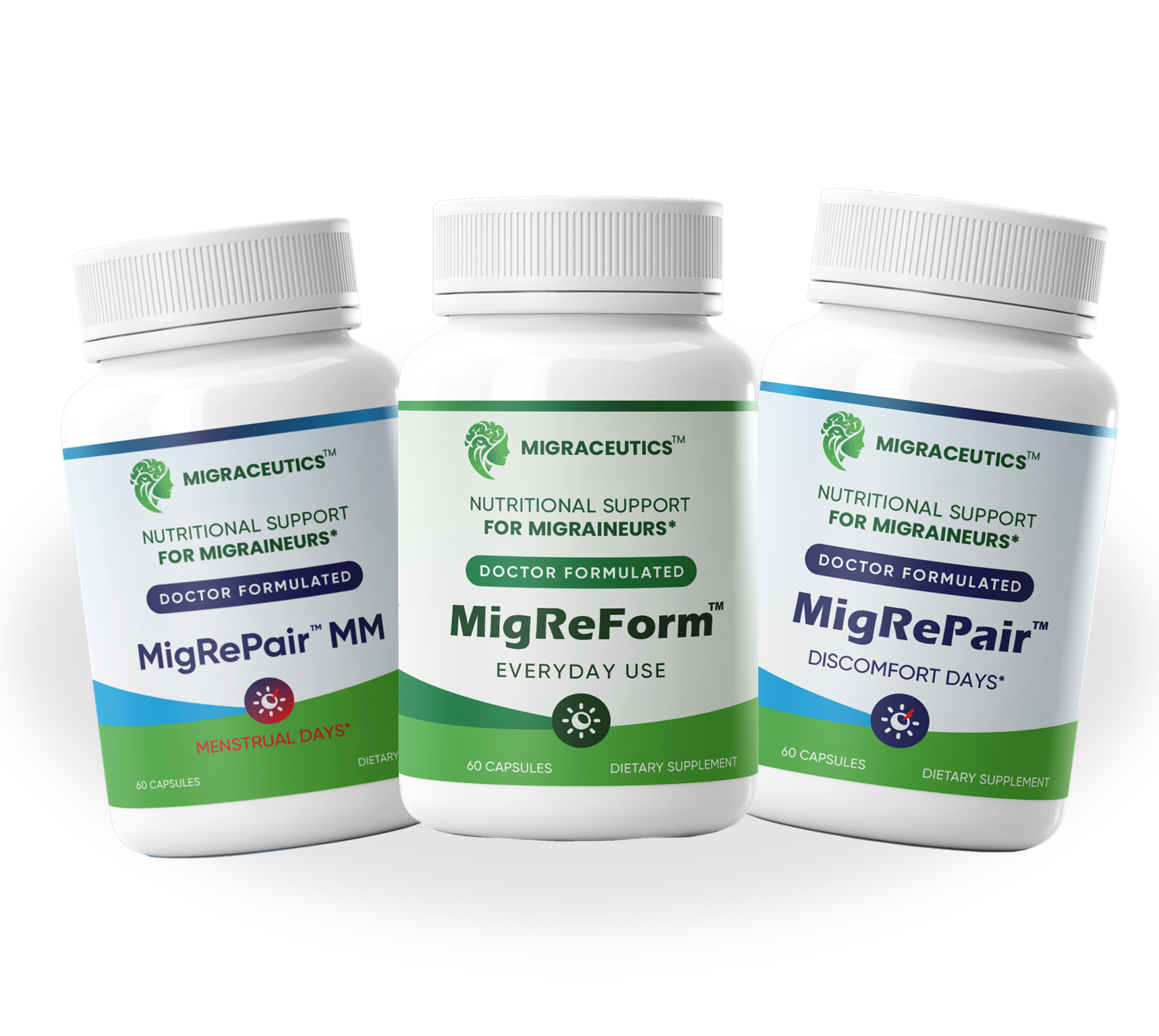
Migraceutics: The One and Only Migraine Phase-Specific Dietary Supplement
Migraceutics is the only phase-specific migraine supplement – supporting each stage of migraine with targeted formulas.
- Between migraines (interictal phase) and during migraines (migraine phase): MigReForm fortifies the nervous system daily
- During migraines (migraine phase): MigRePair supports symptom relief
- Menstrual migraine: MigRePair MM from Day 21 to Day 5 supports hormonal balance and symptom relief
Migraceutics: comprehensive, tailored relief surpassing one-size-fits-all supplements.