Hormones and Headaches
Migraine is more than just a bad headache – it is a complex cyclical neurological condition with distinct symptomatic and asymptomatic phases, each requiring a different management approach.
By Migraceutics Editorial Team •
Reviewed by Dr. Anna Gyarmathy, PhD, MSc, MPH, NBC-HWC
The Link Between Hormones and Headaches
Hormones and headaches are closely linked, particularly in women, where fluctuations in estrogen and progesterone can trigger migraine attacks. Understanding these hormonal influences is key to managing pain and improving quality of life. By recognizing patterns in headaches related to the menstrual cycle, effective strategies for prevention and relief can be identified.
Migraine as a Gender-Disparity Disorder
Up to 33% of women experience migraines in their lifetime compared to only 13% of men.
Women also tend to endure more severe migraine headaches, longer attacks, and greater disability. The underlying reason for this disparity lies in hormonal fluctuations, especially the changing levels of ovarian steroid hormones like estrogen and progesterone, and the related increase in prostaglandins.
These hormonal shifts can both cause and trigger migraines, explaining why menstrual migraines – headaches during the period or around menstruation—are so common. Understanding these patterns helps in identifying effective migraine treatments and migraine relief at home strategies tailored for women.
The Central Role of Estrogen Fluctuation
The rapid drop in estrogen after a period of high hormone levels is the single most critical factor in menstrual migraine attacks. It’s not just the hormone levels themselves, but the change in estrogen-to-progesterone ratio, that acts as a key migraine trigger.
Estrogen plays several crucial roles in brain and vascular function:
- Regulates neurotransmitters such as serotonin, dopamine, and endorphins, which influence mood and pain sensitivity.
- Enhances serotonin activity, helping maintain higher pain thresholds.
- Acts as a vasodilator, widening blood vessels through the release of nitric oxide.
When estrogen drops, this protective effect fades, making blood vessels unstable, increasing pain sensitivity, and setting the stage for a migraine headache.
The Menstrual Cycle: Identifying High-Risk Phases
The menstrual cycle’s hormonal rhythm determines when women are most vulnerable to migraines.
- Follicular Phase: Rising estrogen levels keep migraine attacks less frequent.
- Ovulation: A sudden estrogen surge followed by a steep drop can trigger migraines in sensitive women.
- Luteal Phase: Estrogen declines while progesterone rises—this imbalance can provoke more frequent or severe attacks.
- Menstruation (The Flare): The sharp estrogen drop during menstruation causes a spike in headaches with period. More than half of women report regular migraines during their period, especially in the two days before and three days after bleeding starts.
This perimenstrual period is often when women experience headaches on one side (a typical and main symptom of migraine), pain behind one eye, or even symptoms resembling ocular migraine or vestibular migraine (dizziness and balance issues).
Pain Mechanisms: Inflammation and Neurogenic Sensitization
The hormonal shifts driving headaches during menstruation also intensify inflammation and nerve sensitivity.
- Prostaglandins: Estrogen and progesterone stimulate the endometrium to release prostaglandins, which are chemical messengers responsible for uterine contractions and menstrual cramps.
- Neural Sensitization: Elevated prostaglandins heighten nervous system sensitivity, making migraine attacks more likely.
- Neurovascular Modulation: The estrogen drop amplifies vascular reactivity and neurogenic inflammation, activating the trigeminovascular system. This pathway, involving calcitonin gene-related peptide (CGRP), is central to migraine pain.
These mechanisms explain why menstrual migraines can feel more severe, resistant to common migraine meds, and harder to manage with typical migraine remedies like Excedrin Migraine alone.
Types and Characteristics of Menstrual Migraine
Two main subtypes define hormonally linked migraines:
- Pure Menstrual Migraine (PMM): Occurs exclusively within the perimenstrual window (affecting about 10–14% of women).
- Menstrual-Related Migraine (MRM): Appears both during menstruation and at other times in the cycle (affecting most women).
Hormone-related migraine attacks are typically longer-lasting, more intense, and more resistant to standard migraine therapies. Interestingly, while many women experience migraine aura (flashing lights or zigzag lines) during non-hormonal migraines, menstrual migraines usually occur without aura.
However, other subtypes such as abdominal migraine, vestibular migraine, and chronic migraines can overlap, making diagnosis and management challenging.
As hormone levels stabilize postmenopause, up to two-thirds of women report fewer or less severe migraines. However, migraine management remains important even after reproductive years.
Hormones and Headaches: Why Your Cycle Matters
Hormonal fluctuations play a central role in triggering headaches, particularly in women. Changes in estrogen and progesterone levels throughout the menstrual cycle can affect neurotransmitters, blood vessel stability, and pain sensitivity, creating conditions that make headaches more likely. By understanding how hormones influence headaches, you can better anticipate high-risk periods and adopt strategies for prevention and relief.
Management Considerations for Hormonal Migraines
Managing migraines every day around your cycle involves addressing both hormonal and neurological factors.
1. Hormonal Contraceptives
- Combined hormonal contraceptives can either help or worsen migraines, depending on dosing.
- The hormone-free interval often triggers headaches due to estrogen withdrawal. Using continuous or shortened hormone-free interval regimens may prevent attacks.
- Important: Women with migraine with aura face an increased risk of ischemic stroke with estrogen-based contraceptives. These should be avoided unless cleared by a healthcare provider.
2. Hormones and Headaches: Nutritional Strategies
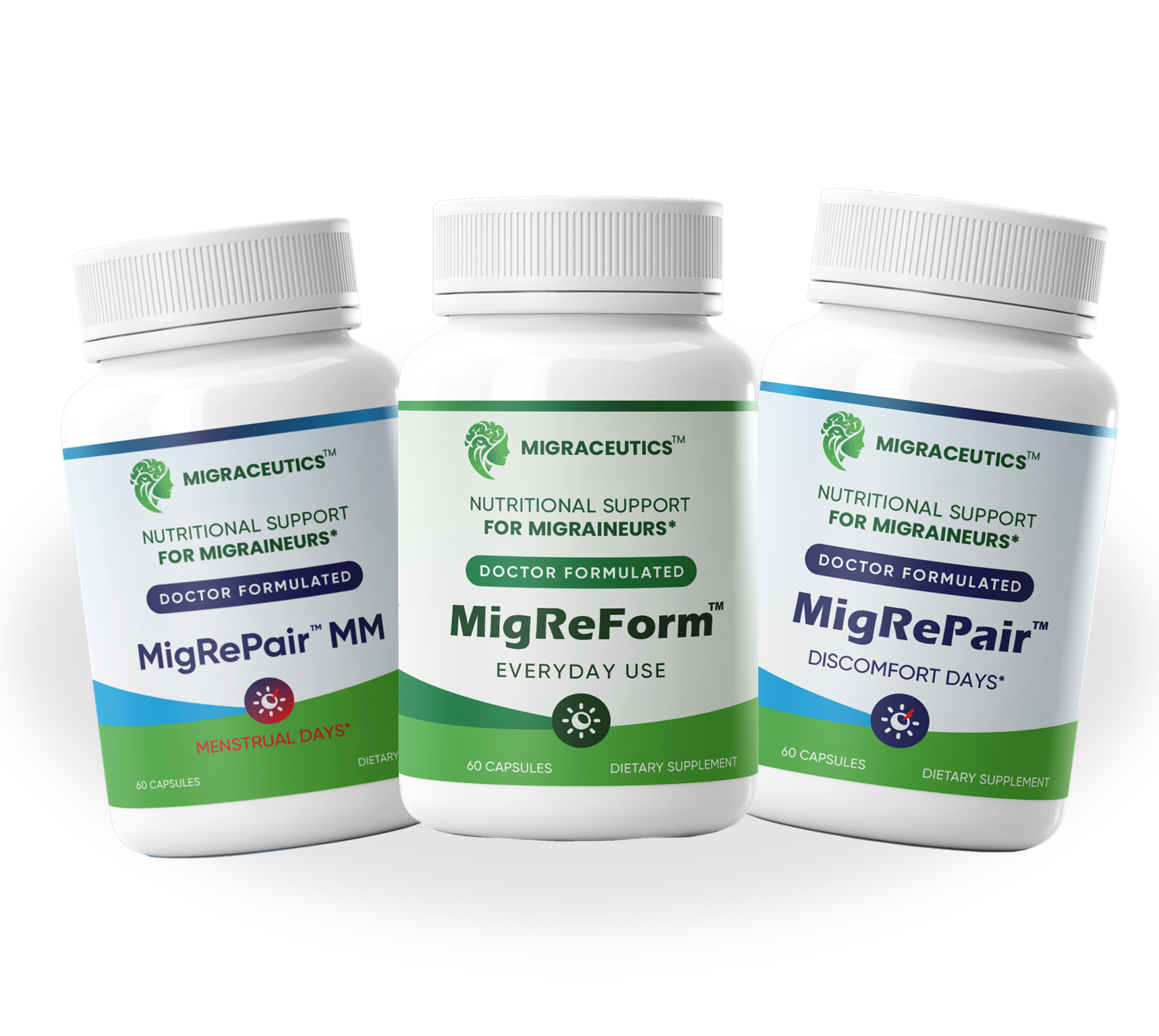
- Powerful multivitamins: Formulated with magnesium for migraines – alongside vitamin B2, zinc, and other essential nutrients – MigReForm helps stabilize neuronal function and support healthy vascular tone. Using the best magnesium for migraines may also help reduce the frequency of menstrual-related attacks.
- Targeted herbal support for menstrual migraine: MigRePair MM is specially formulated for women, combining herbal ingredients like white willow extract, ginger, pine bark extract, grape seed extract, and feverfew to support the body’s normal prostaglandin balance and help manage inflammation, promoting overall comfort during the menstrual cycle. For best results, take MigRePair MM starting on Day 21 of the previous cycle through Day 5 of the new cycle.
3. Hormones and Headaches: Natural Strategies
- Home remedies for migraines: Cold compresses, hydration, and rest in a quiet, dark room.
- Natural cures for headaches: Adequate sleep, stress reduction, and maintaining a consistent diet can minimize migraine triggers.
Hormones and Headaches: Conclusion
Hormonal changes are powerful migraine triggers – but with the right understanding and approach, they can be managed effectively. By tracking your cycle, addressing estrogen fluctuations, and supporting your nervous system through natural remedies and evidence-based supplements like Migraceutics, you can achieve meaningful migraine relief and reclaim control from menstrual headaches.
About the Reviewer – Dr. Anna Gyarmathy, PhD, MSc, MPH, NBC-HWC
Dr. Anna is a researcher, author, and founder of Migraceutics. She holds a PhD summa cum laude and advanced degrees in biomedical fields. She specializes in migraine education, nutritional interventions, and evidence-based lifestyle strategies. Her work focuses on translating scientific research into practical guidance for people living with migraine.
Migraceutics: The One and Only Migraine Phase-Specific Dietary Supplement
Migraceutics is the only phase-specific migraine supplement – supporting each stage of migraine with targeted formulas.
- Between migraines (interictal phase) and during migraines (migraine phase): MigReForm fortifies the nervous system daily
- During migraines (migraine phase): MigRePair supports symptom relief
- Menstrual migraine: MigRePair MM from Day 21 to Day 5 supports hormonal balance and symptom relief
Migraceutics: comprehensive, tailored relief surpassing one-size-fits-all supplements.