Migraine Diet: What to Eat and What to Avoid
Migraine is more than just a bad headache – it is a complex cyclical neurological condition with distinct symptomatic and asymptomatic phases, each requiring a different management approach.
By Migraceutics Editorial Team •
Reviewed by Dr. Anna Gyarmathy, PhD, MSc, MPH, NBC-HWC

Migraines aren’t just about pain — they’re signals from your body that something is out of balance. One of the biggest influences on migraine activity is your diet. Certain foods can reduce the frequency and severity of attacks, while others may silently trigger them. Therefore, understanding what to eat and what to avoid can make a life-changing difference in managing migraines naturally.
How Diet Affects Migraine Frequency
Nutrition directly impacts blood sugar levels, inflammation, and neurotransmitter balance — all of which influence migraine occurrence. When you eat consistently and choose the right nutrients, you give your brain the support it needs to stay calm and stable.
- Inflammatory foods can trigger nerve sensitivity and constrict blood vessels.
- Hydrating foods help prevent dehydration, one of the most common migraine triggers.
- Magnesium-rich foods relax the nervous system and lower stress-induced headaches.
Best Foods for in Your Migraine Diet
Focus on whole, nutrient-dense foods that promote brain health, improve circulation, and balance hormones. These foods can help reduce migraine episodes and shorten recovery time.
| Category | Recommended Foods | Why It Helps |
| Omega-3 Fatty Acids | Salmon, chia seeds, flaxseeds | Reduce inflammation and improve blood flow |
| Magnesium Sources | Spinach, avocado, pumpkin seeds | Calms nerve activity and relaxes muscles |
| Hydrating Fruits | Watermelon, cucumber, oranges | Prevents dehydration-triggered migraines |
| Vitamin B2 (Riboflavin) | Eggs, almonds, mushrooms | Improves brain energy metabolism |
| Complex Carbohydrates | Brown rice, oats, quinoa | Maintains stable blood sugar levels |
Foods and Drinks to Avoid
Some foods can trigger migraines by altering blood flow, hormones, or brain chemicals. Consequently, reducing or eliminating these items can significantly lower the risk of attacks.
- Aged cheeses: Contain tyramine, a known migraine trigger.
- Processed meats: Nitrates and nitrites dilate blood vessels.
- Chocolate: May trigger headaches due to caffeine and phenylethylamine.
- Alcohol (especially red wine): Causes dehydration and vascular dilation.
- Artificial sweeteners: Aspartame and sucralose can disrupt brain chemistry.
- Monosodium glutamate (MSG): It is a food additive that overstimulates neurons, increasing sensitivity to pain.
Sample Daily Migraine-Friendly Diet
| Meal | Example | Benefit |
| Breakfast | Oatmeal topped with banana and flaxseeds | Steady energy and magnesium boost |
| Lunch | Grilled salmon with quinoa and spinach | High in omega-3s and vitamin B2 |
| Snack | Almonds with apple slices | Maintains blood sugar stability |
| Dinner | Chicken breast with roasted sweet potato and broccoli | Protein-rich and anti-inflammatory |
Smart Eating Habits to Support Migraine Relief
- Eat regularly: Skipping meals can drop blood sugar and trigger headaches.
- Stay hydrated: Drink 2–3 liters of water daily to maintain brain hydration.
- Limit caffeine: Small doses may help, but overuse causes rebound headaches.
- Track your food: Keep a migraine journal to identify personal triggers.
Hydration Tip
Combine water with electrolytes (like coconut water or unsweetened electrolyte drinks) to keep your body balanced, especially after exercise or caffeine intake.
Final Thoughts
Diet plays a powerful role in migraine prevention. By fueling your body with clean, nutrient-rich foods and avoiding common triggers, you can reduce migraine attacks, speed up recovery, and enjoy a more stable, pain-free life. Remember, consistency is key — your brain thrives on balance.
About the Reviewer – Dr. Anna Gyarmathy, PhD, MSc, MPH, NBC-HWC
Dr. Anna is a researcher, author, and founder of Migraceutics. She holds a PhD summa cum laude and advanced degrees in biomedical fields. She specializes in migraine education, nutritional interventions, and evidence-based lifestyle strategies. Her work focuses on translating scientific research into practical guidance for people living with migraine.
Migraceutics: The One and Only Migraine Phase-Specific Dietary Supplement
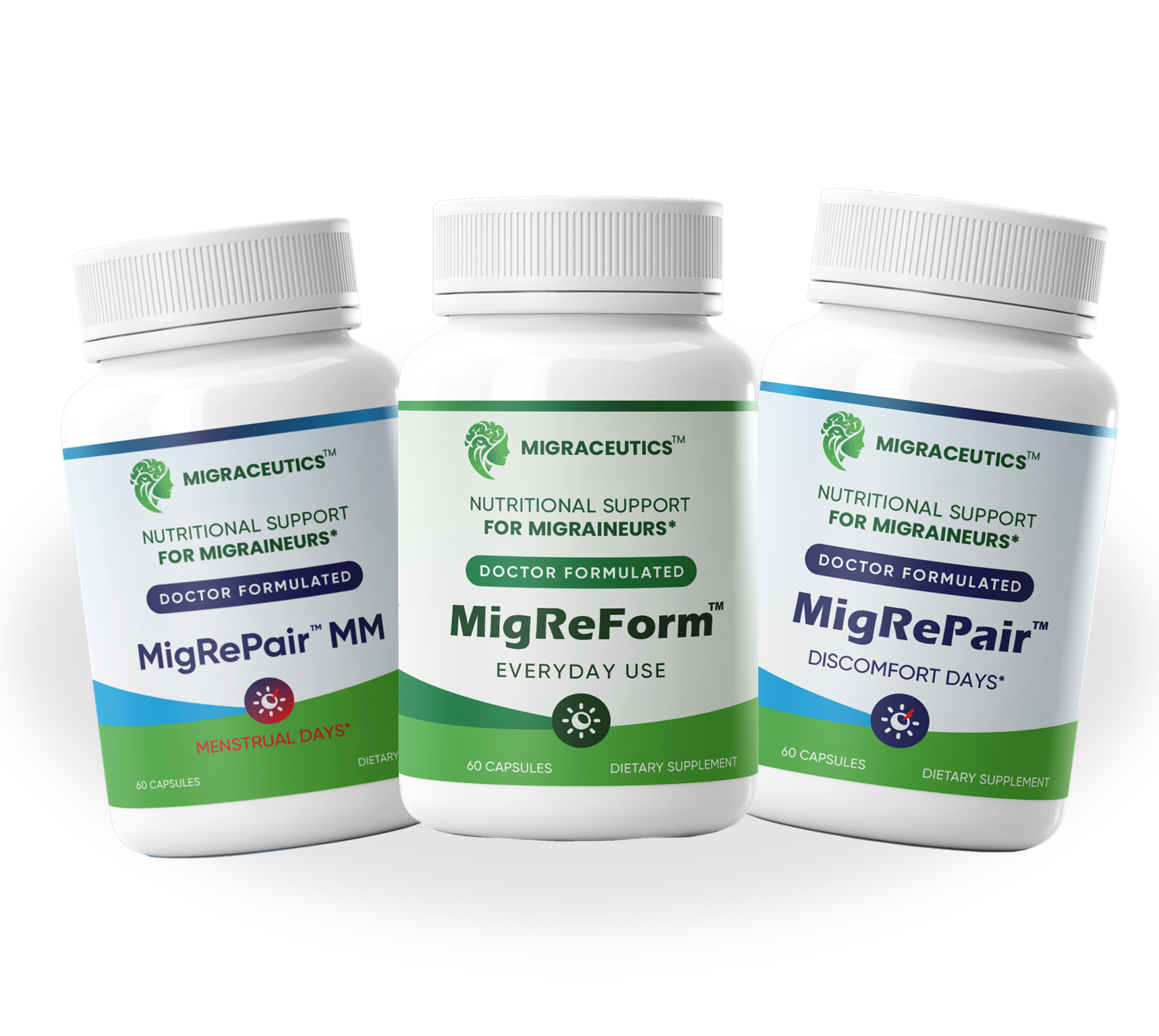
Migraceutics is the only phase-specific migraine supplement – supporting each stage of migraine with targeted formulas.
- Between migraines (interictal phase) and during migraines (migraine phase): MigReForm fortifies the nervous system daily
- During migraines (migraine phase): MigRePair supports symptom relief
- Menstrual migraine: MigRePair MM from Day 21 to Day 5 supports hormonal balance and symptom relief
Migraceutics: comprehensive, tailored relief surpassing one-size-fits-all supplements.